Showing posts with label International Relief. Show all posts

Thursday, June 28, 2012

Celebrating World Refugee Day in June at the Red Cross

Written by Haben Tewlede, intern staff contributor

It has been an exciting month here at the American Red Cross North Texas Region Dallas Area chapter. Our staff and volunteers have had the pleasure of hosting and attending our first ever International Services (IS) Open House, as well as attending a Restoring Family Links casework course. To say the least, it has been an informative couple of days here for all who are involved with, or simply interested in learning more about, how we help war victims and displaced families re-establish their lives.

American Red Cross tracing caseworker Mark Owens met Iraqi refugee Ali Alhasani at our Certificate of Detention presentation.

Certificate of Detention Presentation

We started last week off with the humbling experience of presenting Iraqi refugees with their Certificates of Detention. At this event IS staff and volunteers had the opportunity to greet and converse with Iraqi refugees, like Ali Alhasani (shown above). Despite the unappealing title, and negative connotation associated with the word detention, Iraqi refugees currently seeking these documents are actually fortunate to have possession of these records. With their certificates, displaced Iraqis are able to prove that they were victims of Hussein’s despotic government. These certificates serve a psychological purpose for recovering victims to help provide something tangible to a very confusing and traumatic chapter in their lives. These certificates can also serve a significant purpose to refugees as their home countries become restored and returning to their homeland becomes a possibility again.

Alhasani, just like many of our other refugee clients, came to the ARC with a remarkable background. Similar to many of his political refugee counterparts, he endured tremendous adversity just to be in an environment where he wouldn’t feel like his life was in constant jeopardy. Alhasani came to America as a political refugee in 1993, as a direct result of Hussein’s regime; more specifically because of Hussein’s provocation of the First Gulf War. I asked Alhasani why he came to America, and he explained that, “(he) needed escape Iraq. There was no safe there, they were killing political refugees!”

I then asked him how he was able to get to America. He explained that once his wife was arrested for political reasons, and he was separated from his uncle, he approached American soldiers in an apprehensive plea for help. The soldiers then sent him to the Artawiya POW camp, where he lived in harsh a conditions, and was eventually transferred to the Rafha refugee camp; from there he was permitted to come to America on account of the U.S. political asylum policies of the time. Alhasani went on to explain that he’s making plans to return to Iraq within a year, now that Hussein’s government has been overthrown. Alhasani is a buoyant man, and with the help of the ARC he hopes to restart his life, with his wife and family in the country he once feared to live in. Fortunately for the Alhasani family the ARC is here to help them reconnect, through our Restoring Family Links (RFL) services.

Mark Owens shares his stories from his work reconnecting families across the globe at the International Services open house in Dallas.

A Visit from Tracing Caseworker Mark Owens

International Services National Tracing Caseworker Mark Owens led and initiated a presentation to our team with anecdotes of the work he does, and the experiences he has had as a caseworker. He described the hardships experienced by refugees at camps. He explained how people would travel on foot for miles thorough war torn lands. Some refugees are exploited, raped, or murdered by bandits along the way. One story that remains engraved in my memory is of some children who were playing in the outskirts of their village, when a militant group began an ethnic cleansing raid against their village and families. The children were forced to watch their homes and lives destroyed as the escaped alone to a camp, with nothing more than their lives. It’s people like this that Red Cross aspires to help, and reconnect with the living members of their families. Owens explains that “the most gratifying part of my job is when I make a successful reconnection.” He told us of joy he receives after having seen just a photograph of a reunited family is what allows him to value the importance of the work he engages in.

Special thanks to Brian Moeschler and his team for putting together this informative and engaging open house! If you missed this special evening and want to learn more about getting involved in International Services, please contact Brian at brian.moeschler@redcross.org.

Red Cross International Services workers learn new ways to connect people to their loved ones after crisis using Restoring Family Links.
Family Links (RFL) Casework Course

Red Cross staff and volunteers were also invited to participate in the Restoring Family Links (RFL) Casework Course. The Course is a 7 hour seminar intended for potential caseworkers. Restoring Family Links provides foreign clients with a means to reconnect with their family after being separated by conflict. The Red Cross is able to make this possible with the support and collective file records of the International Committee of the Red Cross (ICRC), The International Federation of the Red Cross (IFRC) and the National Red Cross and Crescent Societies around the world. The RFL Casework Course touched on every aspect of the ARC’s effort to service these particular clients which included: an overview of RFL services, lessons on cross-communications, RFL eligibility criteria and initial case intake, process of conducting client interviews, procedure on delivering news to inquiring clients, resources for the searches, techniques on searching within communities, and how to document case notes. A particularly thought provoking facet of the course was a video of refugee’s and immigrant’s testimonials of their experience of trying to assimilated into American society. It really put the hardship they must overcome in the USA even, after going through inexpressible adversity in their native lands, into perspective.

Although this course is obviously intended to teach International Services members how to properly engage in Restoring Family Links, in accordance with the American Red Cross’ principles, the major take away of the course is understanding the magnitude of the work we do. It’s self-evident that every human is entitled to a handful of basic necessities including, but not restricted to, dignity and the ability to have contact with their loved ones. Although we are all distinctively different we are also undeniably more similar. International Services deals with people’s lives, and more specifically we deal with one of the most vital aspects of their lives; family. For the average American staying in contact with you family is as simple as making sure you save their contact info into a personal phone; but to the clients we help at International Services we are more then likely their last resort of their anxious attempt to reconnect.

To learn more about our Restoring Family Links program or to become engaged in our International Services division, visit us at redcross.org.

Friday, June 15, 2012

Celebrating World Refugee Day with the American Red Cross International Services Program

Written by Amy Yen, volunteer contributor


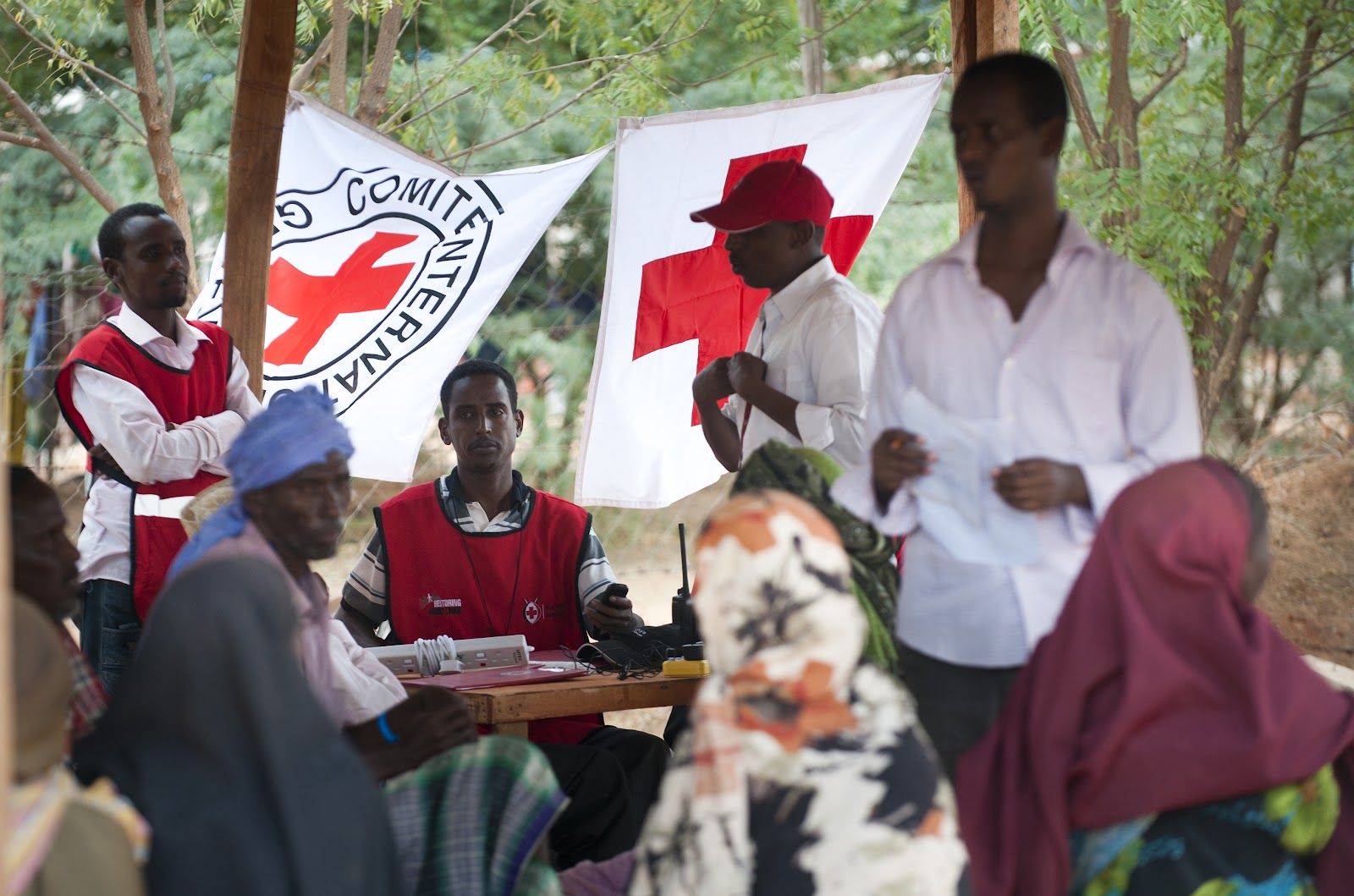
A Restoring Family Links camp is set up in a refugee camp in Kenya, Africa.

Each year, the United States admits tens of thousands of refugees from around the world. About half of those refugees come to our home state of Texas. As we recognize World Refugee Day on June 20, we want to shine a spotlight on a lesser known service provided by the Red Cross that is of particular importance to this huge population of people.

The Restoring Family Links (RFL) program, part of the Red Cross’s International Services (IS) division, helps reconnect families separated by international armed conflict or disaster. Brian Moeschler, Program Manager, International Services and Services to the Armed Forces for the American Red Cross North Texas Region explains, “A refugee is forced to flee their home, usually because of civil war or armed conflict or a disaster, and they’re resettled here in the United States, but they lose contact with their family back home. They can’t let them know where they ended up; many times, they don’t even know that they got here okay.

“Can you imagine not knowing where your family is? Not talking to them for years or even knowing if they’re alive? And then to find out one way or another, to have that closure, it’s so important. But the best part is that we can reunite families.”

Because they often don’t know the RFL program is available to them, the Red Cross reaches out to the refugee population to let them know about the service. Refugees can then come in and tell their story at the local Red Cross chapter. The chapter caseworker gathers as much information as possible about who they are looking for, including names, birthdays, addresses, etc. Sometimes, there’s not a lot to go on.

“There are cases where they literally have to draw me a map,” says Brian. “Because there are no street names, no addresses where they’re from. They’d say, my house is about a mile from this famous landmark, and draw me a rough map.”

The chapter then sends everything they have up to the American Red Cross’s National Headquarters, who reviews it to see if there is enough information to accept the case. If so, the information is passed along to the International Committee of the Red Cross (ICRC), who passes it along to the local Red Cross or Red Crescent organization in the refugee’s home country, who will then go start trying to locate the family member in question.

The scenario also works the other around, when someone internationally is trying to locate a family member who has fled to the US. The information flow goes in reverse, from the Red Cross or Red Crescent organization in the person’s home country to the ICRC to the American Red Cross National Office and eventually, if the person has been traced to Texas, to the local chapter, where it is assigned to a case worker, like Diane Millaway, a volunteer International Services case worker.

“When we receive a case, we use all resources available: the Internet, tax property searches, marriage and death certificates, everything we can think of,” explains Diane. She recently reconnected a man living in the north Texas area with his sister who he hadn’t spoken to in 30 years. During that time, he’d moved through several European countries and eventually to the US. After the Red Cross organization in his country tracked him that far, the American Red Cross National Office found his last known address in the Dallas area.

“We started calling phone numbers, we went to old houses, knocked on doors, wrote letters, left messages,” relates Brian. And eventually, Diane finally reached him. The man can now send a message back to his sister through the same Red Cross channels.

Restoring Family Links remains one of the most unique, yet most unrecognized programs that the Red Cross has. In fact, the Red Cross is the only agency in the world that provides this service.

“What I want people to know about our program is: these are all people. We’re different, yet we’re the same. We all have families. And our goal is to reconnect these families,” says Brian.

With Texas averaging in the top 10 in number of cases nationally, there is a tremendous need for case workers. But Brian specifies that they’re looking for a specific kind of volunteer.

“We need people who really understand what diversity means. They have to be able to leave any biases they have at the door and have openness for other cultures. Case workers need to be skilled at working at a computer, doing research and they shouldn’t mind doing the dirty work to track people down, like making phone calls and knocking on doors. But mostly, we need people who are humanitarians at heart,” Brian explains.

Diane says the experience is worth it. “Meeting the families is so amazing. Some of their stories are incredible. I have such a respect for them, the things they’ve been through,” she says. “I love doing the work to find people. It’s like putting together pieces of a puzzle. And it’s so gratifying when you can reconnect a family.”

Brian says social work is a common background for case workers, but really, anybody who has compassion, tolerance, dedication and a love of detective work can succeed as an International Services case worker.

“The clients we reconnect successfully are always thanking us and I always feel like saying, I really didn’t do much. But if you think about it, this one little action changed their lives. It’s a really fantastic service,” he says. “This is an opportunity to work locally and make an impact globally.”

If you are interested in becoming an IS case worker, please visit Red Cross DFW to learn how to become a volunteer and tell us you’re interested in International Services.

Tuesday, March 15, 2011

Video from WFAA/Channel 8 Telethon to Support Relief Efforts in Japan


This week, WFAA/Channel 8 will be supporting the Red Cross by holding a three-day telethon in support of the Japan Earthquake and Pacific Tsunami relief efforts. The phone bank will be manned by volunteers from the Dallas Area Chapter during the evening newscast March 15-17 from 5:00 - 7:00 p.m. Follow us on Twitter @RedCrossDallas and we will tweet the call-in number.

Officials from the Japanese Red Cross have indicated they would be grateful for donations from the American Red Cross to support their earthquake and tsunami response. Those who want to help can go to http://www.redcross.org and donate to Japan Earthquake and Pacific Tsunami. People can also donate $10 by texting REDCROSS to 90999 to support our disaster relief efforts in Japan and tsunami throughout the Pacific.

WFAA is the exclusive television partner of the 100th anniversary of the Dallas Area Chapter of the American Red Cross.

Monday, April 5, 2010

WFAA and Tom Thumb Give $231K for Haiti Relief


Last week, WFAA and Tom Thumb came to the American Red Cross-Dallas Area Chapter bearing gifts-a check for $231,000 to help relief efforts in Haiti.

The Dallas Area Chapter is grateful to the continued support of WFAA and Tom Thumb. A special thanks to all those who donated.

For an update on our progress in Haiti, view the two month report.

Friday, February 5, 2010

Haiti Earthquake: Relief Update #10

The American Red Cross has spent or committed nearly $78 million to meet the most urgent needs of earthquake survivors.

Thankfully, the humanitarian aid pipeline is opening wider and wider and logistical problems are getting smaller and smaller, but the needs in Haiti are still immense. Red Cross teams are on the ground assessing ways to not only meet the immediate needs but also provide long-term recovery assistance, such as restarting the local market economy and addressing housing needs.


  • Four Red Cross warehouses (two in Santo Domingo, Dominican Republic and two in Port-au-Prince, Haiti) are open and operating at full capacity.

  • The Red Cross is now producing 1 million liters of water per day, enough for 185,000 people to receive 5.4 liters per person per day. In addition, Red Cross teams are working to scale up latrine construction as quickly as possible.

  • To date, Red Cross distributions of food and relief items (blankets, kitchen sets, hygiene kits, buckets, water containers, laundry soap/detergent, and mosquito nets) have reached nearly 20,000 families (or 100,000 people).

  • To date, more than 64 flights carrying Red Cross aid from around the world have arrived in Santo Domingo and Haiti.

  • Shelter remains an urgent need. The Red Cross is working to provide a range of immediate shelter assistance, and we also are assessing needs and developing a strategy to meet long-term housing reconstruction needs.

The Red Cross is also working to help survivors with needed health care to address community health needs and the emerging threat of the spread of infectious disease.

  • A major vaccination program will begin this Friday to vaccinate 150,000 children, ages 0 – 7, against measles, mumps, rubella, diphtheria, pertussis (whooping cough) and tetanus. Local and international Red Cross teams will join UNICEF and the World Health Organization (WHO) to visit settlements throughout the city to vaccinate children. Along with vaccinations, the Red Cross will be teaching basic health skills, such as proper hand washing, waste disposal and safe food and water storage. Red Cross emotional support teams will also be on hand to help children with their emotional trauma caused by the earthquake.

  • At the combined six Red Cross health facilities, an average of 1,200 patients are being treated per day

Wednesday, January 20, 2010

Haiti Earthquake: Relief Update #8


Aid is still getting into Haiti despite a new aftershock this morning and enormous logistical challenges. View photos of the relief effort.
  • The Red Cross has now been able to reach survivors outside the capital city, providing first aid in camps and prioritizing the need for food, water and other basic supplies.

  • Red Cross responders from seven countries are also treating injuries and performing surgery at hospitals and medical centers throughout the capital city.

  • More than 70 American Red Cross Creole-speaking volunteers have been trained and will soon join the USNS Comfort offshore in Haiti to translate for patients receiving medical care from the U.S. military.

  • Red Cross teams are focused on purifying the water supply available in the country and expect to deliver clean drinking water to 200,000 to 400,000 people each day by truck.

  • The American Red Cross is providing approximately 3 million pre-packaged meals in partnership with the World Food Program in Haiti. More than 100 truckloads of meals will leave Miami by air in the next few days and are expected to arrive in Haiti this weekend.

  • In the days ahead, the Red Cross will provide tents and shelter supplies for an initial 20,000 families in Haiti.

  • So far, 100 tons of Red Cross aid has arrived in Haiti. Planes and trucks carrying Red Cross humanitarian assistance are arriving in the region every day.

American Red Cross President and CEO Gail McGovern visited relief operations in Haiti yesterday to help coordinate aid distribution. She witnessed the extensive damage and need as well as the growing presence of Red Cross services. She has begun planning for a multi-year recovery operation with other Red Cross leaders from around the world and heads of state from the region.

Monday, January 18, 2010

Haiti Earthquake: Relief Update #6

Gail McGovern, American Red Cross National President and CEO, has made her way to Haiti and will be working alongside other leaders and some 400 Red Cross workers from 30 countries around the world.

The Red Cross is providing a wide range of help and support in the form of food, water, relief supplies, field hospitals, emotional support, sanitation facilities and family linking services for the Haiti earthquake survivors.
  • The Red Cross spent the weekend delivering more than 300,000 litres of clean drinking water to survivors gathering in three different communities Latrines have also been built in the same areas to help address sanitation issues.
  • Yesterday, the Red Cross set up two medical centers to triage and treat approximately 200 people per day. Three others will arrive over the next couple of days.
  • Over the weekend, three planes carrying Red Cross humanitarian assistance were expected in the region, delivering a field hospital and needed materials such as tarps, blankets, hygiene items, buckets, shelter supplies and kitchen sets. Another shipment of supplies for 20,000 families should arrive Monday on a cargo plane provided in partnership with FedEx.
  • In the days ahead, the Red Cross will begin to provide temporary shelters in Haiti. Kits, containing tarps, rope and tools, as well as tents and blankets, will be made available for an initial 20,000 families.
  • 22,000 people have been registered at www.familylinks.icrc.org. Each of these registrations represents someone who is missing a loved one. 1,500 people have been re-connected through this service managed by the Red Cross.

Sunday, January 17, 2010

Haiti Earthquake: Relief Update #5


We’re making progress. The American public has reached out to help and their support is getting to Haitian earthquake survivors.

The American Red Cross is performing first aid, delivering water, addressing urgent needs and mobilizing a massive response operation in Haiti. More than 100 Red Cross staff from two dozen nations are supporting several thousand local volunteers, and more Red Cross teams from around the world are en route.Red Cross workers from around the world will be providing a wide range of help and support, including food, water, field hospitals, emotional support, telecommunications, sanitation facilities and helping restore links between families.

Relief materials are being delivered, and more help is on the way by air, land and sea.

  • Today, the Red Cross is setting up a field hospital in Jacmel which will be able to treat approximately 200 people per day.

  • The Red Cross has already supplied medical kits to treat 2,000 patients, and hundreds of blankets and plastic sheets have also been distributed.

  • A Red Cross water trucking program is now providing clean water for about 1,000 people living in a makeshift camp in the Delmas neighborhood. Latrines have also been built in the same area to help address sanitation issues.

  • Over the weekend, three planes carrying Red Cross humanitarian assistance were expected in the region, delivering a field hospital and needed materials such as tarps, blankets, hygiene items, buckets, shelter supplies and kitchen sets. Another 20,000 relief items should arrive Monday on a cargo plane provided in partnership with FedEx.

  • In the days ahead, the Red Cross will begin to provide temporary shelters in Haiti. Kits, containing tarps, rope and tools, as well as tents and blankets, will be made available for an initial 20,000 families.

  • The Red Cross is training 40-100 Creole-speaking volunteers who will work as translators on the USS Comfort when Haitians will be brought aboard for medical care.


The damage is extensive, and we know that this is going to be a massive and costly long-term recovery operation.

As of January 16, the American Red Cross has raised more than $87 million for relief efforts. We know that we are going to spend much more than that to help the people of Haiti.Terrible times like these bring out the best in people, and we are grateful for the support being given to the American Red Cross.

Friday, January 15, 2010

Haiti Earthquake: Relief Update #2

In the 48 hours since the earthquake struck in Haiti, the American Red Cross has received nearly $37 million in donations, and we are thankful for this unprecedented outpouring of support. So far, the American Red Cross has provided the following operational support:

-The Red Cross provided blood and blood products to the US Naval Air Station in Jacksonville, Florida. That blood, requested by the US Navy, was shipped by the US Navy to their facilities at Guantanamo Bay, Cuba in support of medical evacuees from Haiti.

-A handful of disaster responders from the American Red Cross have arrived in Port-au-Prince and are coordinating with local and international partners to overcome the logistical challenges and bring aid into the country.

-These individuals join the 15-person staff we already had on the ground and more than six Red Cross teams that arrived from other countries yesterday. Among them are engineers, surgeons and family linking specialists.

-The International Committee of the Red Cross is also helping to reconnect separated families within the country. They have established a special Web site, enabling persons in Haiti and abroad to search for and register the names of relatives missing since the earthquake: www.icrc.org/familylinks. Within 24 hours of its launch, more than 6,000 visited the site looking for loved ones.

-The Red Cross has dozens of disaster specialists in Haiti, assessing the damage, addressing urgent needs and establishing the foundation for a long-term recovery operation.

-The American Red Cross is ready to deploy relief supplies, including blankets, tarps, cooking sets and hygiene items, from our warehouse in Panama as soon as ports begin accepting relief shipments and commercial flights.

Wednesday, January 13, 2010

International Response: Haiti Earthquake


On Tuesday, January 11, Haiti experienced a large earthquake around the Port-au-Prince area. The Red Cross is still gathering details; however, the National Weather Service has more information.

The American Red Cross has pledged $1,000,000 to assist communities impacted by the earthquake in Haiti, and is prepared to take further action as local responders assess the situation.

As with most earthquakes, we expect to see immediate needs for food, water, temporary shelter, medical services and emotional support.

The American Red Cross has made available all of the relief supplies from its warehouse in Panama which would provide for basic needs for approximately 5,000 families. In addition, it is deploying a disaster management specialist to Haiti, and has additional disaster specialists on standby if needed.

The American Red Cross is accepting donations through our International Response Fund. You can help the victims of countless crises around the world each year by making a financial gift to the American Red Cross International Response Fund, which will provide immediate relief and long-term support through supplies, technical assistance and other support to help those in need.

You can also donate by Texting "HAITI" to "90999" and a donation of $10 will be given to the Red Cross to help with relief efforts.

Tuesday, December 1, 2009

Our Global Impact

In 2009, our humanitarian network helped 126 million people in need throughout more than 60 countries. By supporting the Red Cross, you’ve been there to help people around the world recover from devastating storms and floods, and you’ve also taken important steps to protect their communities from future disasters. And on top of that you’ve given millions of families vaccines, mosquito nets and information to guard their children against deadly diseases.

To learn more about the international humanitarian work you have supported, watch our short video: